Minnesota Criminal Vehicular Homicide Defense
When a tragic accident becomes a serious criminal charge, you need experienced, steady guidance on your side.

A Life Changed in an Instant
A serious crash is traumatic for everyone involved. When a person loses their life and prosecutors decide to file criminal vehicular homicide charges, the situation becomes even more overwhelming. You may be grieving, in shock, and trying to process what happened while also facing the possibility of prison, a permanent felony record, and long-term restrictions on your driving and civil rights. At Davis Defense Lawyers, we understand how devastating this is. Our role is to bring calm, clarity, and experienced guidance to an extremely difficult moment in your life.

How Criminal Vehicular Homicide Cases Are Built
Criminal vehicular homicide is not limited to a single type of driving allegation. Minnesota law identifies several ways the state may try to prove the offense. Depending on the case, prosecutors may rely on allegations involving:
- Operating a vehicle in a grossly negligent manner
- Negligent driving while under the influence of alcohol, controlled substances, cannabis or THC, intoxicating substances, or a combination
- An alcohol concentration of .08 or more at the time of driving or as measured within two hours
- Certain Schedule I or II controlled substances or metabolites present in the body under the statutory conditions
- Leaving the scene of a collision that caused the death
- A known dangerous vehicle-maintenance defect under the specific statutory requirements
The State Must Prove Causation, Not Just Bad Driving
A criminal vehicular homicide case requires proof that the charged form of vehicle operation caused the death. That makes the mechanics of the collision important. Andrew looks at vehicle speeds, impact points, event-data-recorder information, road design, visibility, reaction time, conduct of other drivers or pedestrians, medical evidence, and whether the prosecution's reconstruction actually connects the alleged criminal conduct to the fatal result.
Our job is to carefully review every piece of evidence, identify weaknesses or inconsistencies, and make sure that the state is held to its burden of proof.
Key Issues We Investigate
A strong defense begins with a thorough investigation. In criminal vehicular homicide cases, we focus on:
- Accident reconstruction and whether it supports the state’s version of events.
- Weather, road, and traffic conditions at the time of the crash.
- The conduct of other drivers, pedestrians, or cyclists involved in the incident.
- The accuracy and reliability of speed estimates and collision calculations.
- The validity of breath, blood, or urine testing, including chain of custody.
- Whether your constitutional rights were violated during the stop, arrest, or questioning.
- Potential mechanical failures or defects in the vehicles involved.
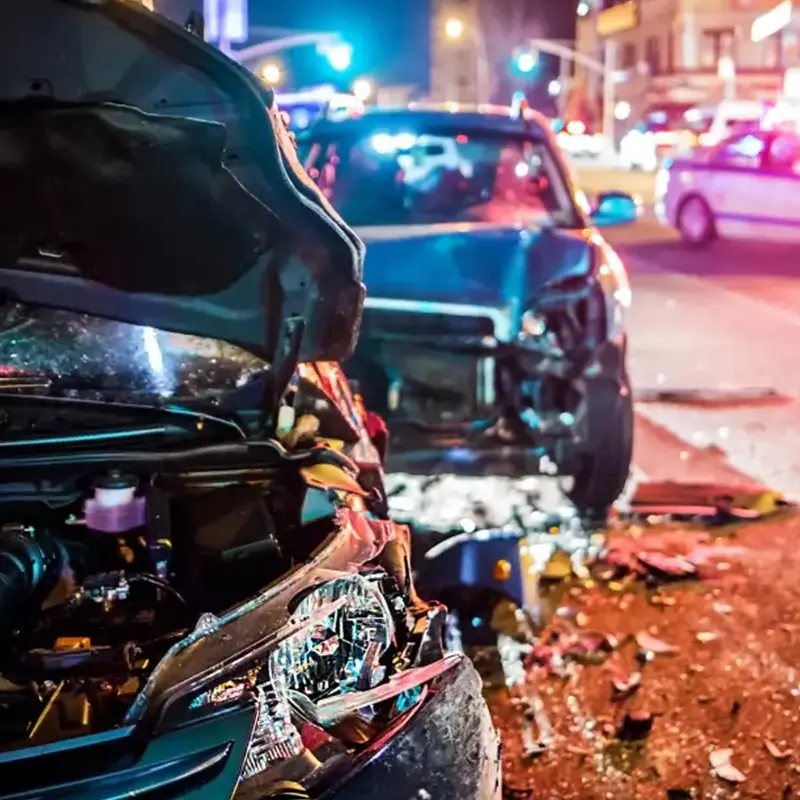
DWI and Criminal Vehicular Homicide
When the charge is based on alcohol, drugs, cannabis, or another intoxicating substance, Andrew examines both the impairment allegation and the connection between the alleged impairment and the collision. Depending on the theory charged, the state may rely on chemical testing, officer observations, medical records, toxicology, and timing evidence.
- Whether testing was lawfully obtained and properly handled
- When the sample was taken compared with the time of driving
- Laboratory records, chain of custody, and toxicology interpretation
- Body-camera, squad video, witness observations, and statements
- Whether the crash evidence supports the prosecution's theory of causation
Challenging the underlying DWI evidence can be a crucial part of defending against criminal vehicular homicide. If the state’s proof of impairment is weak or unreliable, it may significantly impact how the case is charged and resolved.
Potential Consequences
The standard statutory maximum for criminal vehicular homicide is up to 10 years in prison and a fine of up to $20,000. For certain alcohol- or drug-related forms of the offense committed within ten years of a qualified prior driving offense, the statutory maximum can increase to 15 years. The actual sentence depends on the charge, criminal history, sentencing guidelines, and facts.
- Potential prison exposure under a serious felony charge
- Substantial fines and possible restitution
- Driver's-license consequences
- Felony probation or supervised-release consequences
- A permanent felony record
- Significant employment, family, and financial consequences
Because the stakes are so high, it is critical to have a lawyer who understands both the legal and human sides of these cases.
Compassionate, Strategic Defense
These cases are emotionally charged for everyone involved, including families, survivors, and the accused. At Davis Defense, we believe it is possible to respect the seriousness of the loss while still insisting on a fair process and a strong defense. We will:
- Listen to your story and explain your options in clear, honest terms
- Conduct a thorough, independent review of the evidence
- Work with experts when appropriate, such as accident reconstructionists or toxicologists
- Explore all possible resolutions, including reduced charges or alternative outcomes, when available
- Be prepared to take your case to trial if that is in your best interest
What to Do If You’re Facing a Criminal Vehicular Homicide Charge
Taking the right steps early can make a meaningful difference in your case:
- Do not discuss the incident with police, insurance adjusters, or anyone else without first speaking to an attorney. Politely invoke your right to remain silent and your right to counsel.
- Contact a criminal defense lawyer immediately. Early involvement allows your attorney to protect your rights during the investigation and preserve important evidence.
- Gather any documents or information you have, including photos, messages, medical information, and contact information for potential witnesses.
- Follow all court orders and release conditions, including any restrictions on driving or alcohol use.
- Work closely with your attorney to understand the charges, review the evidence, and decide on the best strategy going forward whether that means negotiating a resolution or preparing for trial.
Common questions
Minnesota Criminal Vehicular Homicide FAQ
What is criminal vehicular homicide in Minnesota?
Criminal vehicular homicide generally involves causing the death of another person while operating a motor vehicle in a criminally negligent manner or while committing certain offenses, such as driving while impaired (DWI), leaving the scene of a crash, or grossly disregarding the safety of others. The exact definition and elements depend on the specific statute charged.
Is criminal vehicular homicide the same as murder?
No. Criminal vehicular homicide is a separate offense that specifically involves the operation of a motor vehicle. It is still a very serious felony that can result in substantial prison time and long-term consequences, but it is distinct from intentional homicide or murder charges.
Do I automatically go to prison if I am charged?
A charge is not a conviction. While criminal vehicular homicide carries the possibility of a lengthy prison sentence, the outcome depends on the facts of your case, your prior record, how the incident is charged, and the strength of your defense. An experienced defense lawyer can often make a significant difference in the result.
How does DWI affect a criminal vehicular homicide case?
Allegations of driving while impaired by alcohol or drugs often play a central role in criminal vehicular homicide charges. The state may rely on breath, blood, or urine test results, officer observations, and field sobriety tests. These tests and procedures can be challenged if they were not done correctly or if your rights were violated.
What should I do if I am being investigated after a fatal crash?
Do not discuss the incident with law enforcement, insurance companies, or anyone else about what happened before speaking with an attorney. Anything you say may be used against you later. Contact a criminal defense lawyer immediately to protect your rights and guide you through the investigation.
What does the state have to prove in a Minnesota criminal vehicular homicide case?
The state must prove the death was caused by operation of a motor vehicle under one of the statutory criminal-vehicular-homicide theories, such as gross negligence, specified impaired-driving conduct, an alcohol concentration of .08 or more, leaving the scene, or certain known vehicle defects. The exact elements depend on the theory charged.
What is the maximum penalty for criminal vehicular homicide in Minnesota?
The standard statutory maximum is up to 10 years in prison and a fine of up to $20,000. For certain alcohol- or drug-related forms of the offense committed within ten years of a qualified prior driving offense, the statutory maximum imprisonment can increase to 15 years. Sentencing in an individual case depends on more than the statutory maximum.
Minnesota communities