Minnesota DANCO, OFP & Restraining Order Violations
These charges are common and easy to accidentally violate. We protect your rights and defend your future.

Understanding DANCO, OFP, and Restraining Orders in Minnesota
These orders are issued quickly, sometimes at arraignment, sometimes as bail conditions, and sometimes without your input. They prohibit all contact in almost every form:
- Texts, calls, emails, and social media messages
- Liking or commenting on posts
- Third-party messages sent through friends or family
- Being near the person’s home, workplace, or vehicle
- Receiving or answering calls from the protected person

DANCO vs. Order for Protection: What’s the Difference?
A Domestic Abuse No Contact Order (DANCO) is a criminal court order that can restrict contact while a criminal case is pending. It is different from an Order for Protection (OFP), which is handled through a separate civil process. The exact restrictions depend on the order itself, so Andrew reviews the language of the order, the underlying case, and the alleged contact before deciding how to respond.
Can Third-Party Contact Violate a DANCO?
A DANCO can prohibit indirect contact as well as direct contact. Asking a friend, family member, or another person to deliver a message to the protected person can create a violation allegation. Andrew looks closely at what was actually said, who delivered the message, text or social media evidence, and whether the state can show that the communication originated with the person subject to the DANCO.
Even if the alleged victim asks to reconcile, wants to talk, or wants the order removed, the order remains fully active until the court says otherwise.
Penalties for DANCO Violations in Minnesota
Penalties increase dramatically based on your record:
- Misdemeanor (first offense) Up to 90 days in jail and a $1,000 fine.
- Gross Misdemeanor (one prior within 10 years) Up to 1 year in jail and a $3,000 fine.
- Felony (two or more priors within 10 years) Up to 5 years in prison and a $10,000 fine.

Each contact can be charged separately, meaning multiple texts can result in multiple charges.
Why These Cases Are So Easy to Violate
DANCO violations often arise from situations people do not realize can create a problem. The protected person contacting first does not automatically make a response lawful, and indirect messages through other people can also lead to allegations. Common situations include:
- The alleged victim reaches out first
- Parents share children and need to coordinate schedules
- A mutual friend passes along a message
- Accidental run-ins happen in small communities
- Emotions run high during breakups or pending domestic assault cases
- Phone numbers are not blocked correctly
How We Defend DANCO & OFP Violations
Andrew looks at the facts surrounding the alleged contact and what the state can actually prove. That may include:
- Whether the contact was direct, indirect, accidental, or unavoidable
- Whether the protected person initiated the contact
- Whether a third party actually delivered a message and where that message originated
- Text messages, screenshots, social media activity, phone logs, or other digital evidence
- Whether police or prosecutors misinterpreted the communication
- Whether law enforcement had probable cause for the arrest
- Whether a motion to modify the order is appropriate
- How the alleged violation relates to the underlying domestic or criminal case
Our goal is to reduce or dismiss the charge, protect your criminal record, and stabilize your situation so you can move forward safely.
If You Have a DANCO or OFP, Do This Immediately
If you are accused of violating a DANCO or believe contact may have created a problem, take these steps:
- Stop communicating with the protected person, even if they contact you first.
- Save texts, messages, social media records, voicemails, and other evidence related to the contact.
- Do not send follow-up explanations, apologies, or messages trying to fix the situation.
- Exercise your right to remain silent and avoid discussing the allegation with law enforcement before speaking with a lawyer.
- Contact a criminal defense attorney who can review the order, the alleged communication, and whether the order should be modified.
Why Clients Trust Davis Defense
Andrew has handled hundreds of domestic-related cases, including DANCO violations, domestic assault, 911 interference, and probation violations. He knows how emotional, confusing, and high-stakes these cases can be. We focus on:
- Fast intervention, including help with bail
- Preventing additional charges
- Filing motions to modify or remove the order
- Protecting your parental rights
- Challenging weak or retaliatory allegations
- Keeping your record as clean as possible
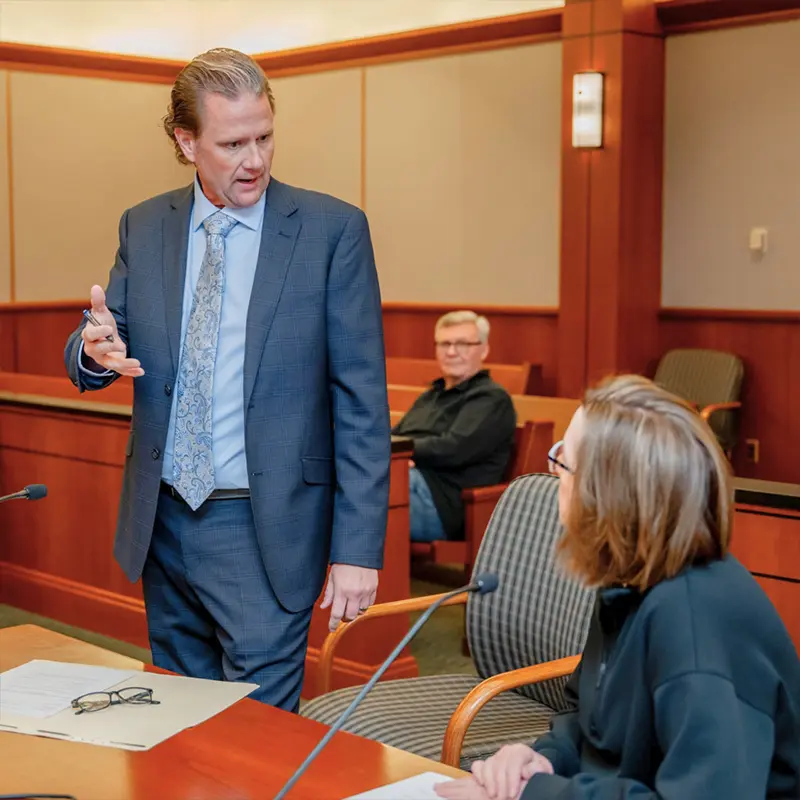
A DANCO or OFP violation doesn’t make you a criminal—it makes you human. Let us help protect your future.
From Andrew Davis
Understand the charge
Published: June 12, 2026
Common questions
Minnesota DANCO & OFP Violation FAQ
What exactly is a DANCO in Minnesota?
A Domestic Abuse No-Contact Order (DANCO) is a court order prohibiting any contact direct or indirect with the alleged victim in a domestic-related case. This includes texts, calls, social media, being physically near them, or communication through third parties. Only a judge can modify or remove a DANCO, even if the alleged victim wants contact.
Can I be charged if the alleged victim contacted me first?
Yes. The protected person contacting first does not automatically make responding lawful. A DANCO remains in effect until the court changes or removes it. If the protected person reaches out, the safest course is to stop communication, preserve the messages, and speak with an attorney before responding further.
Is a DANCO violation a felony?
It depends on your history. A first-time violation is a misdemeanor (up to 90 days in jail and a $1,000 fine). One prior within 10 years makes the new charge a gross misdemeanor (up to one year in jail and a $3,000 fine). Two or more priors within 10 years make it a felony (up to 5 years in prison and a $10,000 fine).
How can the state prove a DANCO violation?
These cases are often proven through recorded jail calls, text messages, screenshots, phone logs, social media communication, witness reports, or police observation. Because the evidence is often digital, prosecutors move fast and mistakes are common. We review every detail for weaknesses and unlawful police actions.
Can a DANCO be modified or removed?
Yes, but only by a judge. Your attorney can file a motion to modify the order, which may allow contact, limited contact, or contact regarding children. The alleged victim cannot remove the order themselves.
What should I do if I accidentally violated the order?
Stop all communication and call an attorney immediately. Do not send follow-up messages, explanations, or apologies these will be used against you. Fast legal action can often prevent additional consequences, negotiate your release, or begin modifying the order.
What is the difference between a DANCO and an Order for Protection in Minnesota?
A DANCO is a criminal court order that can restrict contact while a criminal case is pending. An Order for Protection (OFP) is a separate civil order. The restrictions and procedures are different, so it is important to read the actual order and understand which type applies to your situation.
Can third-party contact count as a DANCO violation?
Yes. A DANCO can prohibit indirect contact, including asking another person to deliver a message to the protected person. Whether a violation can be proven depends on the facts, including what was said, who delivered the message, and what evidence shows where the communication originated.
Minnesota communities