Minnesota Gun Rights Restoration & Weapons Charges Defense
Lost your right to own or carry a firearm? We help Minnesotans get a second chance.

Minnesota Gun Rights: How People Lose Them
Minnesota and federal law contain overlapping firearm prohibitions. The length and scope of a prohibition depend on the exact legal basis. Common issues include:
- A Minnesota conviction or juvenile adjudication for an offense classified as a crime of violence
- Certain felony or other convictions that trigger federal firearm law
- Domestic-assault convictions and findings involving firearm use
- Qualifying Orders for Protection, DANCOs, or other court orders
- Certain controlled-substance convictions or other statutory disqualifications
- Specified mental-health commitments or incompetency findings
- Database, court-record, or NICS information that may need to be reviewed for accuracy
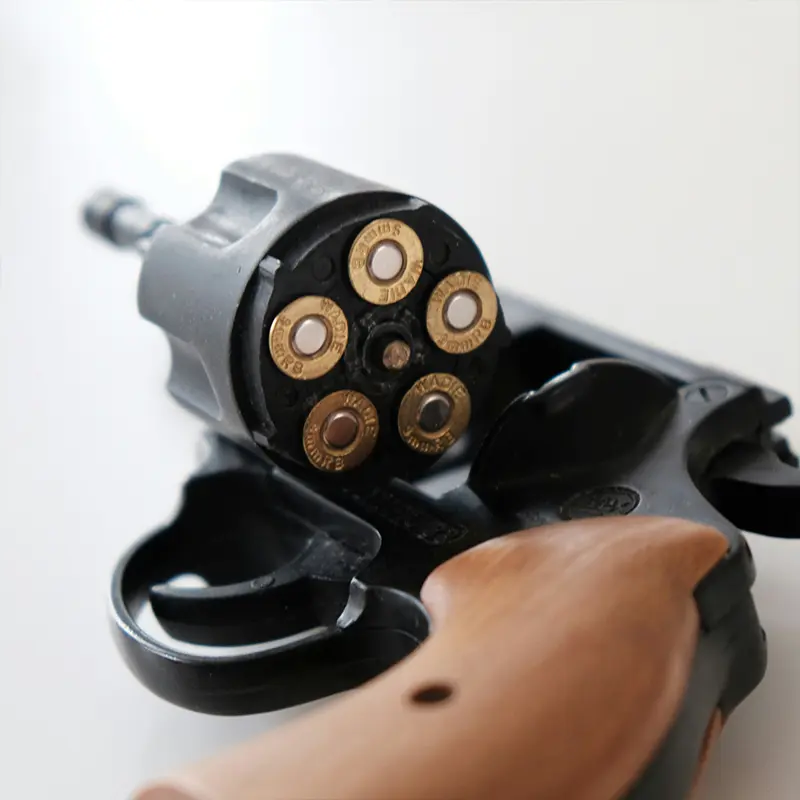
Many people don’t realize the full impact of a plea or conviction until years later, when they are denied a firearm purchase, rejected by NICS, or told they can no longer hunt with family. That’s where we come in.
Who Is Prohibited from Possessing Firearms in Minnesota?
Under Minnesota law, some people are barred from possessing firearms either temporarily or permanently. While every case is different, you may be prohibited if you:
- Have a prior felony conviction, especially for a crime of violence
- Have a recent domestic assault, harassment, or OFP-related conviction
- Are subject to a qualifying order for protection or no-contact order
- Have certain drug-related convictions or are considered chemically dependent
- Have been adjudicated mentally ill or developmentally disabled under specific standards
- Have certain federal disqualifications that apply even if Minnesota law is silent

Paths to Restoring Your Gun Rights
The correct remedy depends on why firearm possession is prohibited. A Minnesota restoration petition is available in certain cases, but expungement alone does not automatically restore firearm rights and state relief does not automatically answer every federal-law question. Possible paths can include:
- Judicial restoration after a Minnesota crime-of-violence prohibition Minnesota law allows a person prohibited because of a crime-of-violence conviction or delinquency adjudication to petition for restoration after release from physical confinement and to ask the court to find good cause.
- Relief available under another specific statutory prohibition Some disqualifications have their own time periods or restoration procedures, so the exact basis for the prohibition must be identified first.
- Reviewing domestic-related orders or findings A current OFP, DANCO, conviction, or firearm-use finding may impose restrictions that need to be analyzed separately.
- Correcting inaccurate court or background-check records A denial can sometimes involve incomplete or incorrect identifying or disposition information rather than a valid ongoing prohibition.
- Coordinating state and federal analysis Before possessing or purchasing a firearm, the effect of any state restoration should be reviewed alongside applicable federal law.
What Does “Good Cause” Mean in a Minnesota Restoration Petition?
Minnesota's restoration statute allows a court to restore firearm rights when a person prohibited because of a crime-of-violence conviction or delinquency adjudication has been released from physical confinement and shows good cause. The statute does not reduce the inquiry to a single waiting period. A petition should address the underlying offense, time since the case, compliance with supervision, later criminal history, rehabilitation, stability, reasons for seeking restoration, and public-safety concerns.
What Happens If a Gun Rights Restoration Petition Is Denied?
Under Minnesota law, if a restoration petition under section 609.165 is denied, another petition generally cannot be filed for three years unless the court gives permission to file sooner. That makes preparation important before the first petition is submitted.
We start by reviewing your entire record, not just one conviction. Then we build a strategy that explains your rehabilitation, your need for firearms for hunting, work, or personal safety, and why restoration serves the interests of justice and public safety.
Federal Law, NICS, and Background Checks

State and federal firearm law overlap, and a Minnesota court order should not be treated as a substitute for checking federal eligibility. Before purchasing or possessing a firearm after a restoration case, the exact conviction, relief granted, and any continuing federal prohibition should be reviewed. NICS or dealer denials can also require examination of the records being relied on.
- Denials when you try to buy a firearm from a dealer
- NICS background check problems
- Risk of new federal charges if you possess a firearm while still federally barred
Defending Weapons Charges: Protecting Your Record and Rights
Gun rights restoration and weapons defense go hand in hand. If you’re currently facing a weapons charge, how your case is handled now can determine whether you ever lose your rights or whether you need restoration later. We defend clients charged with:
- Carrying a handgun without a permit
- Possessing a firearm as a prohibited person
- Transporting rifles or shotguns unlawfully in public
- Furnishing a weapon to a minor
- Using or possessing a firearm in connection with another crime
In many cases, the charge is based on an officer’s interpretation of a complicated statute or a questionable stop or search. We dig into the details, challenge the basis for the arrest, and work to reduce or dismiss charges whenever possible.
Our Process for Gun Rights Restoration
Every case is different, but most restoration files follow a similar path:
- Comprehensive review of your criminal record, court files, and any orders affecting firearm rights.
- Determine eligibility under Minnesota law and identify any federal issues that could still apply.
- Gather supporting evidence: work history, treatment completion, letters of support, community involvement, and your reasons for seeking restoration.
- Prepare and file a detailed petition asking the court to restore your firearm rights, and serve all required agencies.
- Appear at the hearing, present your story, and argue why restoration is appropriate and consistent with public safety.
Why Work with Davis Defense on Gun Rights?
Gun rights restoration is not just paperwork—it’s storytelling, strategy, and credibility. Judges want to know who you are now, not just what’s in your old file. Prosecutors want to know they’re not being asked to take a blind risk. At Davis Defense, we:
- Take the time to understand your full history and goals
- Explain plainly what is and is not realistic in your case
- Prepare you for court and help you tell your story the right way
- Connect the dots between your rehabilitation, your need for firearms, and public safety
Common questions
Minnesota Gun Rights Restoration & Weapons Charges FAQ
Can I restore my gun rights in Minnesota after a felony conviction?
Sometimes, but the answer depends on the conviction and the specific state and federal prohibition. Minnesota provides a judicial restoration process for a person prohibited under state law because of a crime-of-violence conviction or delinquency adjudication if the statutory requirements are met and the court finds good cause. Other felony-related prohibitions may require a different analysis.
Can I own a gun after a domestic assault conviction in Minnesota?
Domestic assault convictions often trigger both state and federal firearm prohibitions. In some situations, you may be able to seek restoration through the court or challenge how the conviction is classified. Because federal law can still apply even if a state court restores your rights, it’s critical to have a lawyer who understands both layers. We look at the exact statute you were convicted under and how it interacts with federal law before taking any steps.
What if my gun rights were taken because of an order for protection (OFP) or DANCO?
Orders for protection and domestic abuse no-contact orders (DANCOs) can temporarily restrict your ability to possess firearms. Violations can also lead to new criminal charges. Once the order ends or is modified, you may be able to address firearm restrictions or seek restoration, depending on your full history. We help you understand how the order affects you now and what you can do going forward.
What is the difference between state gun rights and federal gun rights?
Minnesota law and federal law do not always line up. You could be eligible to restore your firearm rights under Minnesota law, but still be barred from possessing a firearm under federal law and the NICS background check system. A smart strategy considers both systems together so you don’t unintentionally commit a new crime by possessing a gun when federal law still says you cannot.
Do I need a lawyer for a weapons charge like carrying without a permit?
You should. Weapons charges can lead to jail time, a permanent criminal record, and long-term loss of gun rights. Even a first offense for carrying a handgun without a permit can be a gross misdemeanor, and repeat offenses can become felonies. An experienced defense lawyer can challenge the stop, the search, and whether the state can prove every element of the charge.
How long does gun rights restoration take?
There is no one-size-fits-all timeline. Most restoration petitions take several months because they involve gathering records, preparing a detailed petition, notifying agencies, and appearing in court. The more complex your history, the more preparation is required. We walk you through each step and give you a realistic sense of the process.
Does expungement automatically restore gun rights in Minnesota?
No. Sealing or expunging a criminal record should not be assumed to restore firearm eligibility. Firearm prohibitions and restoration are governed by separate state and federal laws. The exact conviction and legal basis for the prohibition need to be reviewed independently.
Minnesota communities